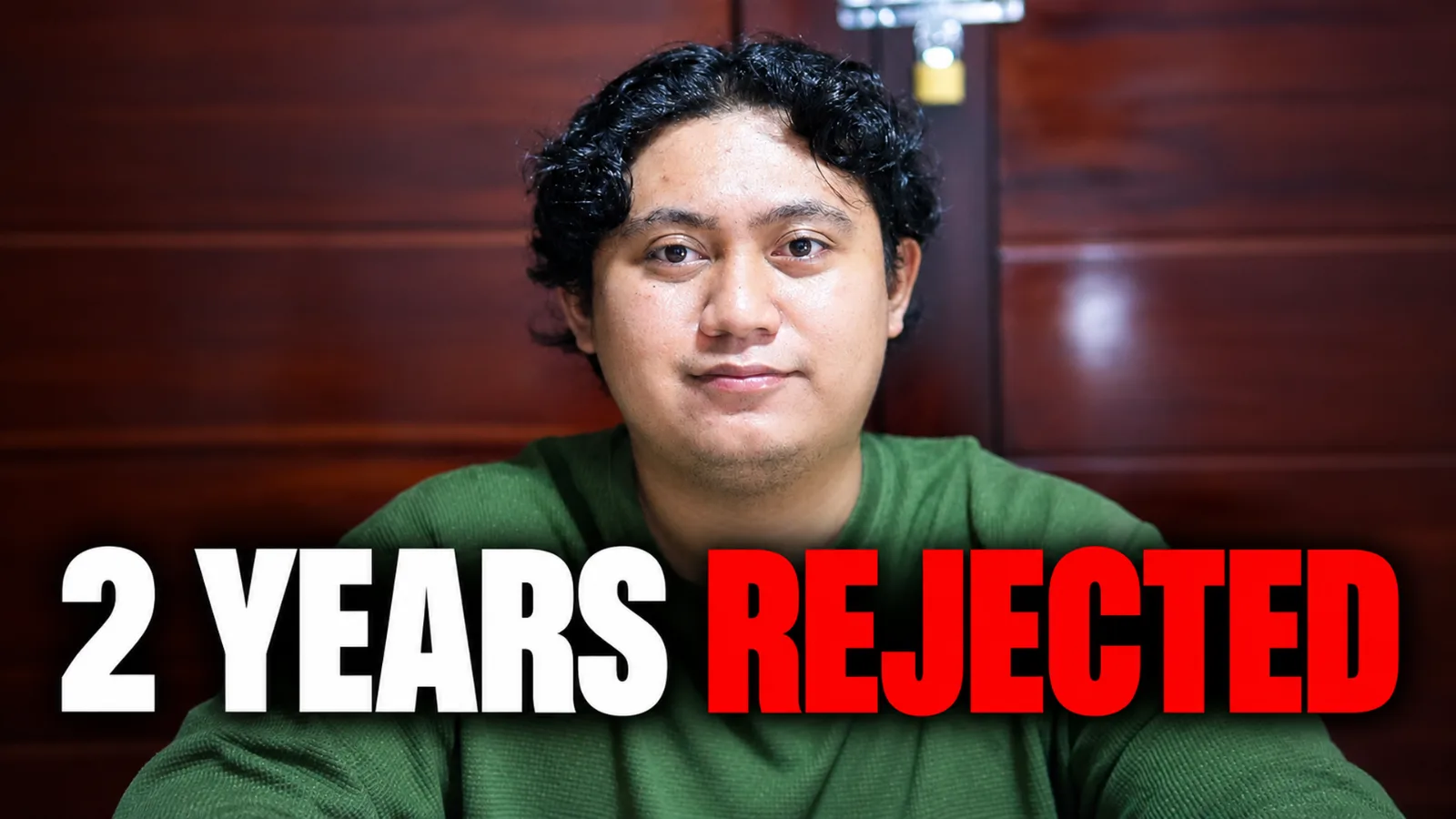
This one is a story. If you're planning to apply to VA agencies as a bookkeeper, or as a virtual assistant in general, I hope it helps you. I'll share how I kept getting rejected, how I finally got through, how I landed my last agency client, and how that same client ended up "buying me out" of the agency.
For those who don't know me yet, I'm Kyle Nelson Omac. I've been a VA bookkeeper for almost five years, and I also run a business that helps companies fix their systems and software. I'm still a VA today, but on a flexible arrangement. I don't take full-time roles anymore because I've got other work going on.
So grab a coffee, or just let this play in the background while you work. Let me tell you a story.
The Pandemic Start: No Degree, No Experience, No Callbacks
I started as a VA bookkeeper during the pandemic. Work from home was everywhere. Freelancing was everywhere. Every time I went online, there was a new hiring post, a new training, a new opportunity.
So I applied. And applied. And applied.
Here's what I was working with: no college degree (I finished senior high school, but I didn't finish college), no prior accounting experience, and I was very young. The only relevant thing I had was my QuickBooks Online ProAdvisor certification. That was it.
You probably know the big VA agencies, Cyberbacker, BruntWork, Pineapple VA, and many more. Search on Google or ask AI today and you'll find a long list of agencies and talent-matching companies. For agencies, experience and a degree are crucial. And I had neither.
My first two months of applying were rejection after rejection. Direct clients, agencies, all of them. I didn't even get initial interviews. My resume was weak. When I did get a reply, it sounded like this:
"You're too young to work in accounting."
"You have the skill, but we need someone with a degree. That's our company standard."
"No degree would be fine, but you also don't have experience."
Two months of that. I was frustrated and full of self-doubt.
The First Client That Felt Like a Miracle
So what did I do during those two months? I stayed active in VA communities. I taught online. I posted tutorials. If you look at my old YouTube channel, it's all tutorials.
Back then, something kept happening. Some VAs would get hired, then panic because they didn't know what to do. Meanwhile, I knew exactly what to do. I just couldn't get anyone to hire me.
Because I was posting tutorials in those communities, people started messaging me asking for one-on-one training. I didn't charge anyone. I was just teaching. One of the people I trained already had a full-time job and a bookkeeping client on the side. Even with my help, she couldn't keep up because she was so busy at her day job.
So she said: "Let me just refer this client to you. I'll turn it over properly."
The client asked me one question: "Do you know how to use QuickBooks?" I said yes. No background check. No resume review. That was it.
That was my first client. To me, it was a miracle. I never imagined that a client would come from that path. All that time I'd been doing the "right" things, like learning how to apply on Upwork, waking up at 1 or 3 AM because some video said that was the best time to send applications, then going back to sleep and waking up at 11. And the client came from a referral, from simply helping people.
$4 an Hour and the Two Years of "Sacrifice"
My first rate was $4 per hour. For my first two years, all my clients paid low rates. Based on how companies assessed me, I was "unqualified" for a lot of jobs, so I settled for less for the sake of experience.
But I want you to remember this: I never worked for free. Cheap was okay, as long as it was paid. That was my principle back then. I needed to feel that as a VA, I was being paid for my work, even if it was low.
Today, I don't entertain those very low rates anymore. But in the beginning, you have to make sacrifices. You need to get your foot in the door, understand how the industry works, and grow as a VA.
It's the same in business. If you start a business in a crowded market, what do you do first? You match prices, lower them, beat others on customer service, or build a better brand. When you're new, you have to accept some sacrifices.
My hours were low too, two or three hours a day, because my clients were small companies. My first clients all came through referrals, direct outreach, and OnlineJobs.ph (OLJ).
I'll be honest. In those first two years, my career wasn't sustainable. Low hourly rate, low hours. It was basically part-time work. But I had a plan: since I had no degree and no experience, real-world VA bookkeeping experience was going to be my way to make up for it.
The BPO Job That Hired Me "By Mistake"
After two years of direct client experience, I tried applying to a corporate role in Davao City, at a BPO. And I got hired.
Here's the funny part. During orientation, the HR person said to me, "You probably have a degree since you got hired here."
I told him, "Sir, I never said I was a degree holder. I'm a senior high school graduate."
My resume back then listed my QuickBooks ProAdvisor certification, my two years of experience with US companies, and references they could call to verify my work history. I didn't list my education at all, because writing "undergrad" felt like an instant reject.
HR's response surprised me. He told me not to downplay being a senior high school graduate. I passed their interviews and their tests. I deserved to be there.
I worked there for a little over a year as an Accounts Payable Specialist. I made sure to prove myself, did my job well, and got really good at it.
Why VA Agencies Suddenly Started Calling Me Back
After a year and a bit in corporate, I updated my resume to include that experience. I had two years of direct VA bookkeeping plus over a year of corporate accounts payable.
And then something changed.
The same VA agencies that used to ignore me started calling me back. I was getting interviews. I was making it to final interviews. I remember thinking, "Why is everyone chasing me now? What changed?"
That's when I realized how much VA agencies value corporate experience related to the role you're applying for.
Since the BPO was on-site, I resigned to look for a work-from-home role. When agencies asked why I left, I said I was looking for a work-from-home opportunity because of the commute. No one had a problem with that.
I moved back to my home province and kept applying. Interviews kept coming, and one thing I've learned is that when the interviews start rolling in, you're close to landing a client. Eventually, a VA agency hired me.
The QuickBooks Desktop Job I Quit After Two Months
My first agency role was Accounts Payable again, for a Canadian construction company. I only found out later that they used QuickBooks Desktop, honestly one of the oldest QuickBooks technologies.
I couldn't do bulk imports. Bills, expenses, filing, approvals, everything was manual. I had gotten used to cloud-based systems. My previous VA work was in QuickBooks Online, and the BPO also used cloud-based technology. I was used to bulk data, bulk reconciliation, and fast work. On QuickBooks Desktop, entering everything one by one with no import feature, I was slow.
The pay was good. But it wasn't for me. I lasted about two months, then resigned.
I want to be fair to agencies, though, because they have real advantages:
You're guaranteed 8 hours of work and a full 40-hour week.
The management is solid, and your pay is secure because the agency handles the client.
Benefits are good: HMO, night differential, and competitive pay.
It just wasn't the right fit for me at that time.
My Last VA Agency and the Client Who "Bought Me Out"
After that, I got burned out. I took a break, focused on business and content creation, and when I needed income again, I applied to VA agencies one more time. This is the story of my last agency.
I found the opening on Facebook. I went through the initial interview, then the final interview, and in the final interview, I was face to face with the client for the first time.
The client ran a real estate bookkeeping firm, a specialized firm handling many real estate clients. That matched my background almost perfectly, since most of my clients over almost five years have been real estate related.
But here's what surprised me. In that final interview, we didn't talk about work at all. Nothing technical, nothing about accounting. We just talked personally. It turned out the client also created content and was writing a book. We had a lot in common. We were on the same frequency.
That's why I got the job.
Then something great happened. Because I was under the agency, the client eventually told me: "Kyle, I'm willing to work with you long term, and I'm planning to buy you out so you can work directly with me."
Let me explain how a buyout works with VA agencies:
You're employed under the agency, and the agency places you with a client.
If the client becomes very satisfied with your work, they can "buy you out."
The client pays the agency a fee, because the agency did the work of screening you, interviewing you, and compiling your files.
After that, you're no longer under the agency. You work directly with the client.
"Bought" sounds harsh, I know. But that's the term. And that's what happened. The client bought me out, and we started working directly. My pay and contract became more flexible too, because agencies usually have fixed schedules.
When the Client Went Silent
Things went well for a while. Good work, good communication, a good relationship.
Then one day, the client stopped showing up.
One meeting missed. Then three scheduled meetings with no show. One week became two, then three. Still nothing.
Meanwhile, the client was actively posting on social media about a new restaurant. I even commented on the posts. But I couldn't do much work, because a lot of decisions needed approval before I could move forward.
The client was still paying for the hours I billed, but those hours kept shrinking. My last billing was about 5 hours across two weeks.
So I resigned. I sent a formal email and also messaged the client on social media, since we were friends there.
After I filed my resignation, the client finally replied. Something difficult had happened in their personal life, something they couldn't share publicly or with me. They apologized for going silent. But they didn't remove my access. I could sense they would come back to the business eventually.
And here's the part that still amazes me. The client's firm had many clients, and one of them was a close friend. The client told that friend to hire me directly so I wouldn't lose work. I already knew that company well because I'd been working closely with them.
So that friend became my new client.
That was my last VA agency experience: bought out, then let go, then referred by the very same client to someone new.
What I Learned About Getting Hired by VA Agencies
Here's what I realized after all of that.
1. Corporate or BPO experience is a huge plus
If you want to get hired by VA agencies, corporate or BPO experience related to the role you're applying for is a big advantage. Agencies only started hiring me once I had actual full-time experience.
2. Agencies look for an "employee-minded" VA
VA agencies are usually looking for an employee type of VA: someone who is willing to work fixed hours, use a time tracker, report regularly, work overtime, learn, and be trained. When you face a VA agency, show up with an employee mindset.
3. Formalize your resume. It's your first impression
Your resume is the first screening. It's your first impression. If your resume is a generic Canva template, not corporate, and not ATS-friendly, do you really expect to get noticed?
Your resume is your hook. It's the document that proves what kind of person, employee, and VA you are. If it looks effortless, don't expect an agency to spend time on you. If you don't invest the right time in your resume, don't expect to be noticed.
There are two kinds of resumes worth knowing:
Ordinary/chronological resume: the ATS-friendly, Harvard-structured format.
Functional resume: great for beginners and career shifters. Look it up and try applying with one.
4. "Ber months" are hiring season
The ber months (September to December) are a great time to apply. Books are closing for the year, and many clients realize their books haven't been cleaned up since January. So they hire for catch-up bookkeeping, usually project-based. I get emails about agencies and clients hiring during this season.
5. Software is software
Someone in the live asked if SAP experience counts when job posts ask for QuickBooks. My answer: SAP is an ERP. It's still an accounting system. It's actually more complex than QuickBooks. If you understand SAP, NetSuite, or Oracle, you already understand how accounting software works.
The same goes for older experience. If you've used desktop-based or local systems, just upgrade your knowledge to cloud-based tools. It's not that hard once you know the basics. Treat your experience as an advantage, not a gap.
6. On rates, start where the rate is already set
Another question was about rates for beginners. When I started, I didn't know what to charge either. My advice: start with clients who already state the rate they'll pay, for example on platforms where the rate is posted upfront. Once you understand the market, you can start setting your own rate.
Competency Is the Real Competition
Here's the main thing I want you to take from this story.
You struggle to get hired. I get it. But have you thought about the other side? Agencies and employers struggle to find qualified people too. I have friends who run agencies, and they have a really hard time finding qualified VAs.
So how do we get through? By becoming competent in all levels.
When I say competent in all levels, I mean: you speak well, your resume is strong, you're technically qualified, you're visible, you know what you're doing, you know what you're saying, and you stand by something. Competent in sales, marketing, operations, and accounting.
QuickBooks certification? That's the bare minimum now. Accounting basics? Bare minimum. Being in the AI era, a lot of people get lazy because of AI. But it has also never been easier to become competent. The real question is: are you willing?
When someone asks me, "How are you different from other applicants?" my answer is simple: search my name on Google. You'll see my experience, my books, my website. I put myself out there publicly because I want the public to hold me accountable, so I keep pushing myself to get better. I teach because I want to stay competent in communication. It's my way of staying sharp.
Ask yourself: What makes me different from other applicants? If your answer is "nothing," that's why you're not getting hired.
For almost five years as a VA bookkeeper, I've tried to do something different in my career, whether people believe in me or not. I don't want to be the cheap bookkeeper. I don't want to be the replaceable bookkeeper. I want to be the bookkeeper who knows the software, audit, and reporting, and who can give real value.
Robots may come. Flying cars may come. But if you're competent, you will be hired. Companies are always looking for people with competency. And it's a big plus if you have an entrepreneurial mind, a mission and a vision for why you do things.
Competency Is an Intent. Perfection Is an Objective.
This is what I want you to carry with you:
Competency is an intent. Perfection is an objective.
They are different. With perfection, you want everything to be perfect. But we as humans are not designed to be perfect. We are drawn to perfection, but no one ever gets there.
So when perfection is your goal, you never finish anything. You never start. You lose motivation and you stop moving.
But when competency is your goal, when it's your core value, it's an intention. It's the intent to keep improving over time, even when you're lacking, even when your resources are limited. You use what you have because you're committed to getting better.
Look at my oldest uploads. They're rough. Low quality. I don't even like watching them. My background was ugly. Someone once told me, "You teach VA work but you can't even fix your background?"
But a nice background was never the goal. If I waited until my wall was painted before making content, I might not have any content today. I'd rather show up imperfect and keep improving than wait to be perfect and never start.
That's competency. Not perfection.
A Prayer Before We End
I ended the live session with a prayer, and I want to share part of it here, too: for everyone trying to become a VA, may you be given knowledge and wisdom, the right tools and the right mindset. May you be connected to the people who can help you grow and become your bridge to your first client. And for those who are ready and just waiting for the opportunity, may that opportunity come, so you can provide for yourself, your family, and your community.
Want to Go Deeper?
There's so much I want to share that doesn't fit in one hour or one 30-minute video: the deeper psychology and logic behind why VA bookkeepers get hired, how I've stayed sustainable, and the personal techniques that keep me from running out of clients. That's why I built my programs, with free and paid options, so I can break it all down in modules.
You can also join our Discord community. The link is on my website.
To know more about my services, writings -- connect with me here --- here's my website: https://www.kylenelsonomac.com/
Join my program: https://programs.kylenelsonomac.com
Faith without action is Fiction.