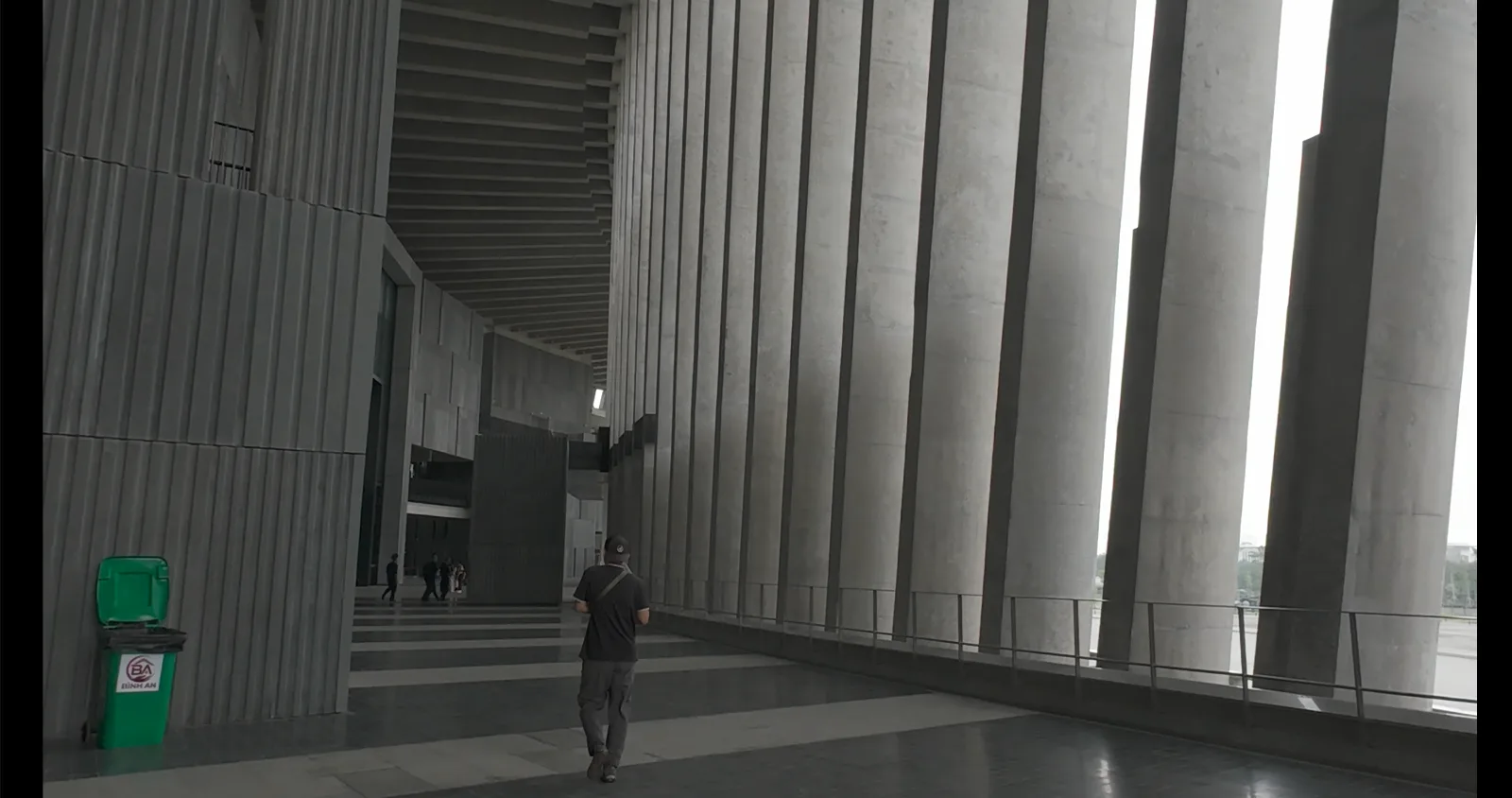
The First Stop Was a War Museum
The first place we went to in Vietnam wasn't a beach, a café, or a night market. It was a war museum in Hanoi.
We had come straight from the airport. Almost nobody in our group had slept, and none of us had eaten properly. On the way to the museum, our tour guide told us why we were starting there: so we could understand what Vietnam had been through before we tried to enjoy anything else the country had to offer.
I remember thinking it was an odd choice for a first stop. Why would a group of Filipino tourists need to understand Vietnam's history? I had no idea that this question would follow me all the way home.
Outside the Gates: Helicopters, Tanks, and a Line of Flags
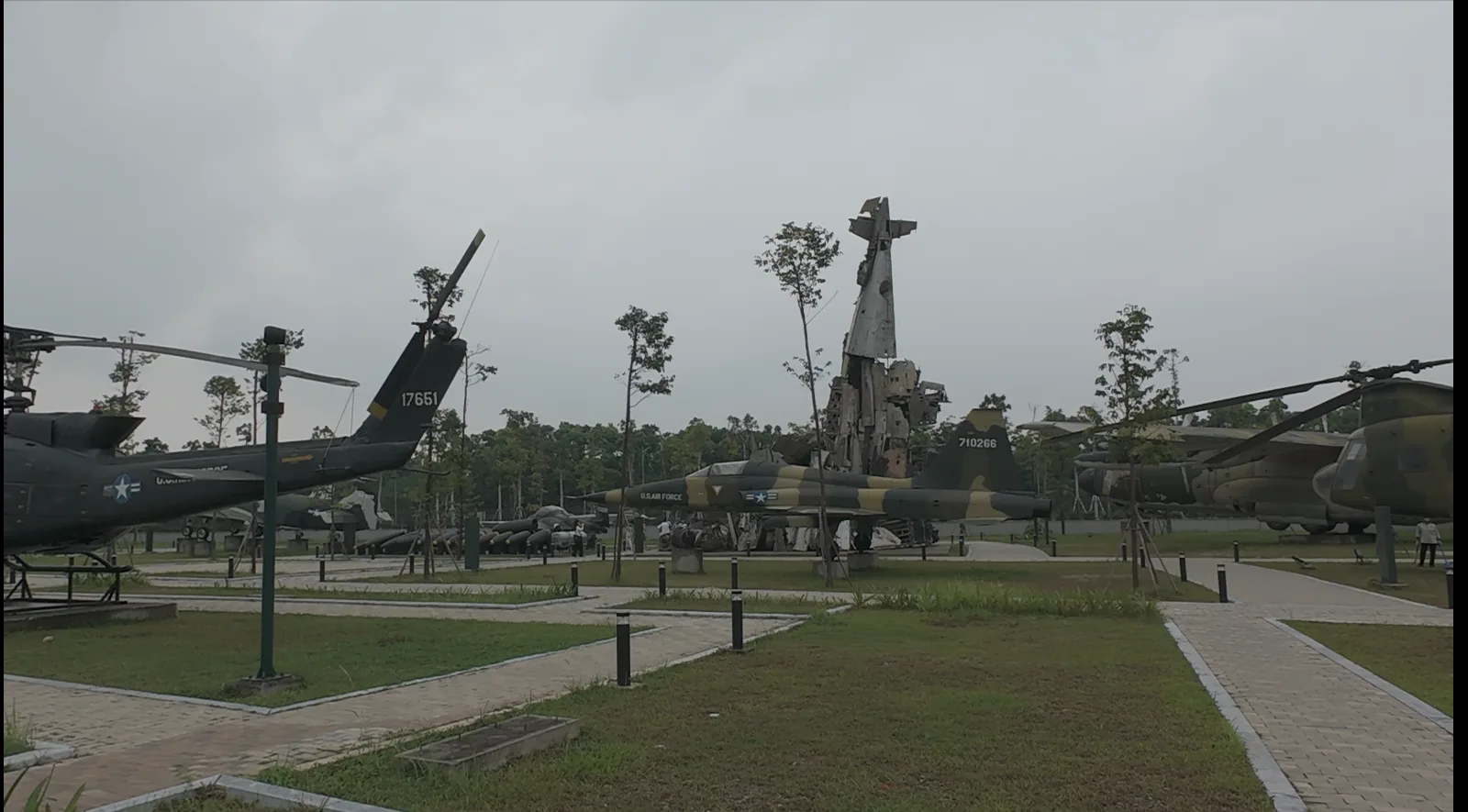
The museum grounds are huge. Before you even reach the main building, there's an open space filled with the remnants of the war between the United States and Vietnam: a helicopter, a tank, airplanes once used by the US Air Force. These were the biggest pieces in the collection, so they were placed outside, where you can't miss them.
Near the entrance, I saw a tall tower and a row of flags, the communist flag and the Vietnamese flag alternating, about six of them lined up in front of the museum. Everything about the entrance told me the same thing: this place exists to tell one story, and it wants you to remember it.
Why Were There So Many Children?
What surprised me most wasn't the machinery. It was the children.
They were everywhere, inside and outside, some still in their school uniforms. There were buses parked outside, bringing in group after group. Our tour guide explained, in English, that we were there right after Vietnam's Independence Day celebration in September, which is why so many students were visiting.
Some of my friends even greeted the kids, said hi, and took pictures with them. But something else was going on in the back of my mind. In all my years as an elementary and high school student, I can't recall a single time we were taken to a museum. Not one field trip to a place that told the story of where we came from.
Maybe it's because our area didn't have much preserved to show. Maybe it's because no one made it a priority. Whatever the reason, I had no experience like the one those Vietnamese children were having, in an organized, planned visit built around their nation's story.
Inside the Museum: A Nation That Refuses to Be Misunderstood
Inside, the building is enormous. You climb a set of stairs because the museum is elevated, and once you're in, you find wide open spaces with the collections tucked into different sections. The exhibits cover the dynasties, the wars between them, the foreign powers that invaded, and of course the war with the United States. There were pictures of heroes, statues from past dynasties, and pieces from conflict after conflict.
I'll admit something: I'm a restless person. While our guide was explaining the highlights, I drifted away from the group. I wandered on my own and started reading the exhibits myself.
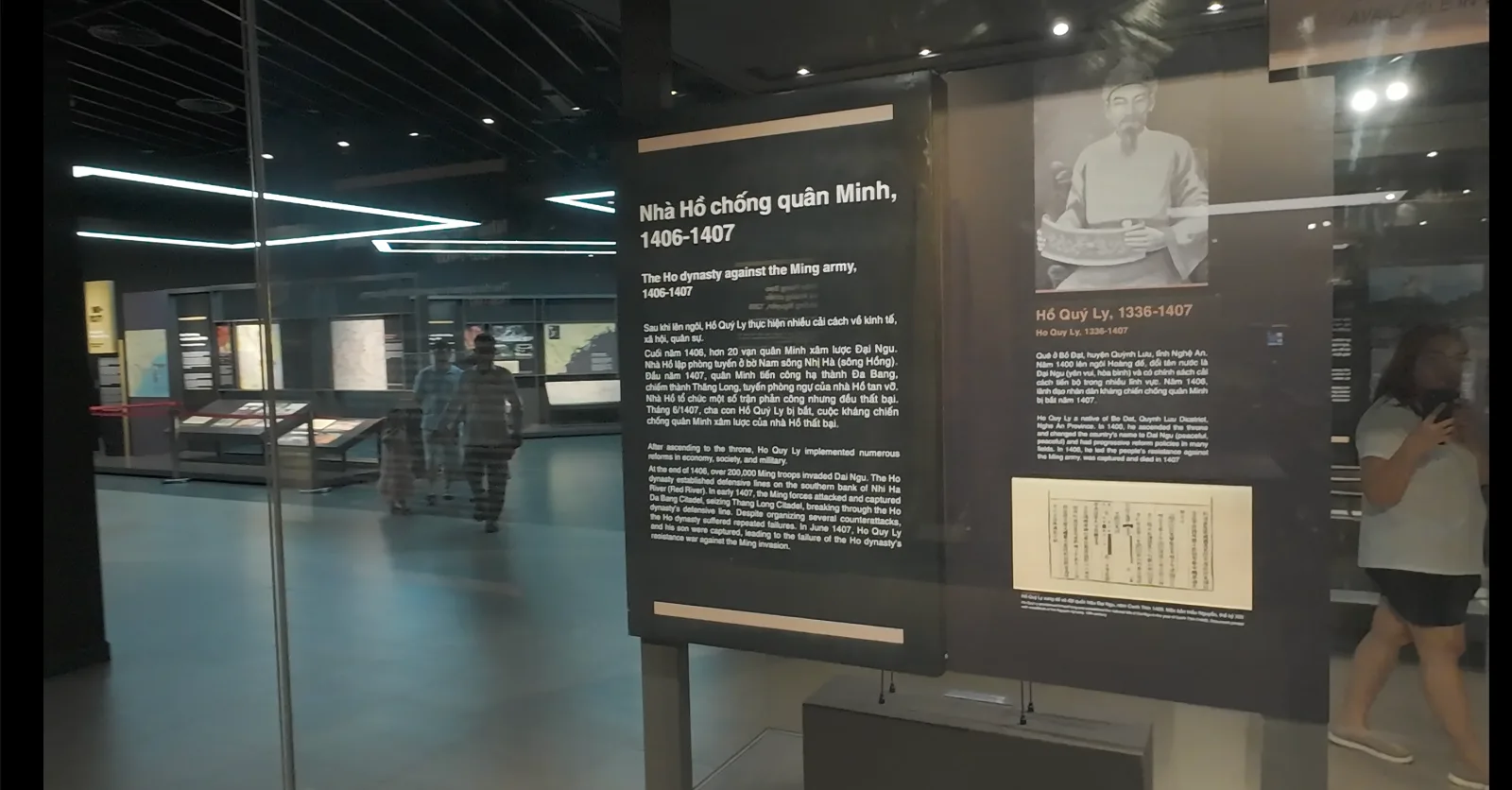
That's when I noticed how detailed everything was. Nothing was just an object sitting behind glass. Each piece came with context, a story, and a date. There were videos and graphics, projectors, and miniature models showing what the landscapes looked like and how the battles were planned. And some of the exhibits and records went back to before the common era, which told me they had been documenting their history for a very long time.
They were deeply invested in making sure you understood what you were looking at.
The Question I Wasn't Ready For
One of my friends came up to me while I was reading and asked me something. I don't remember his exact words, but the heart of it was: Kyle, why do you think it's important to keep our history?
I think he asked because he was also impressed. Vietnam had preserved its story with so much detail, with graphics, evidence, and timelines. It made me think about the Philippines. We have a National Museum, and provinces have their own museums too. But what is a museum for, really?
I didn't get to think it through, because he was already walking away.
The Answer I Didn't Plan to Give
So I said the first thing that came to mind: "Maybe this is why they weren't defeated by the US."
That was all I said. It was an intrusive thought, an off-the-cuff answer. I couldn't explain why I said it, and he just nodded. Honestly, I was surprised I had answered like that at all.
I kept walking through the museum, watching how hard they worked to make visitors understand the past. But the answer stayed with me.
A Night Later, It All Came Back
At the museum, I was too exhausted to think deeply. It was only that first night, once I finally got some sleep, that everything came flooding back. Why do they keep their history like this? Why does it matter to a nation? Why does it matter to its people?
And then I remembered my own first experience of a museum, which was in 2022, when my cousin took me to the National Museum in Manila.
Hanoi vs. Manila: Beautiful Is Not the Same as Understood
The National Museum of the Philippines is a beautiful place. It's well-lit and well-presented, and it has the Spoliarium and so many other things to see. I remember taking picture after picture because the place was so aesthetic.
But I remember something else too: I didn't understand what I was looking at. I didn't know the context or what the objects were for. I could appreciate the beauty, but not the meaning.
In Hanoi, it was the opposite. The context was splashed across screens, with literature, dates, names, exactly what happened, and visuals of how it happened. I felt like they simply wouldn't allow you to walk out without understanding.
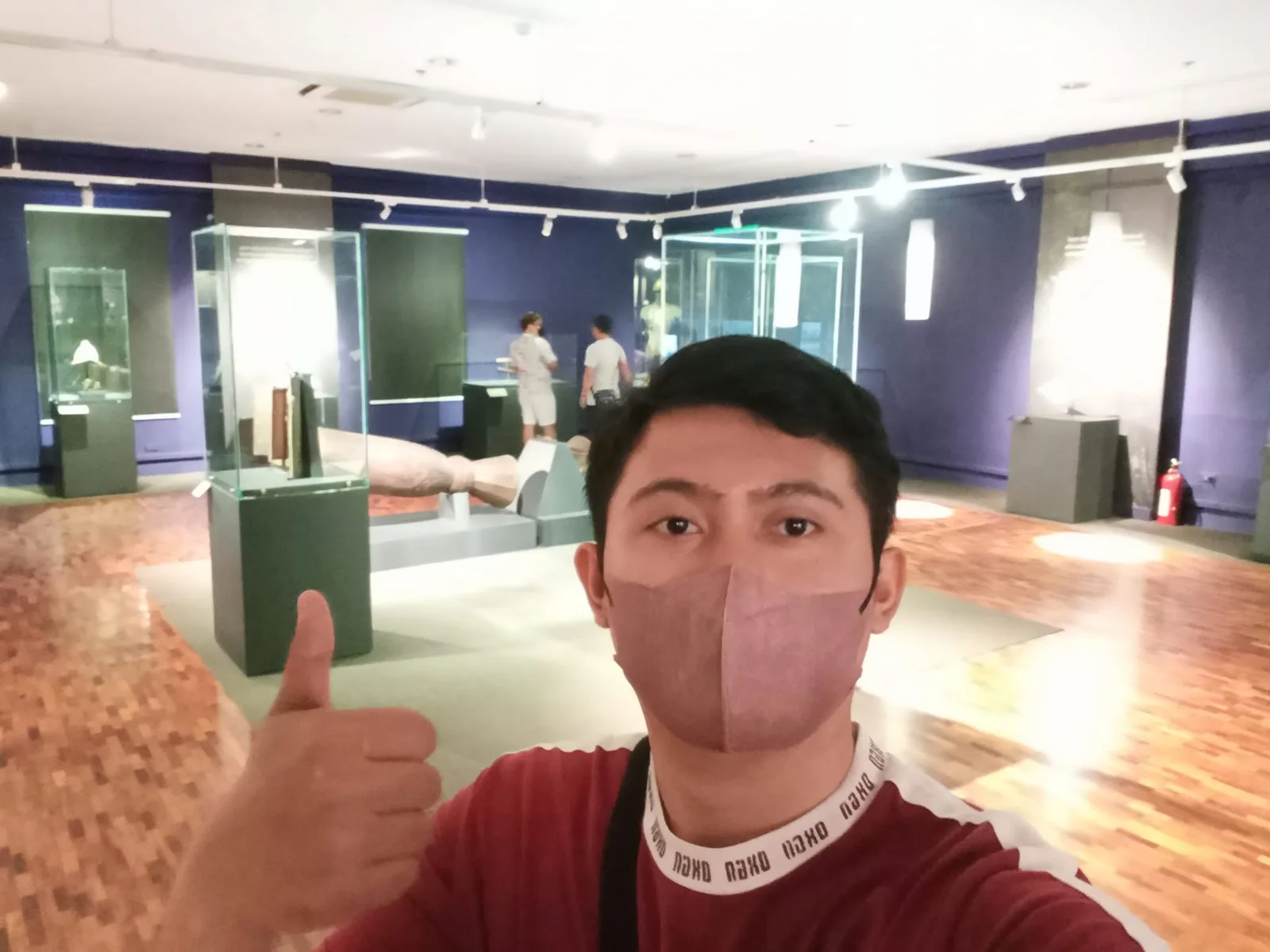
Was It an Accident That This Was Our First Stop?
Then I thought about our tour guide's words on the way from the airport: our first stop is the war museum, so we can understand the history Vietnam has gone through.
They had planned that. Vietnam, as a country, wants even a tourist from another nation to understand its story. A foreigner. On the first day.
And that made me ask myself: if a country cares this much about how a visitor sees its history, how much more does it care about how its own children see it?
Why Would You Fight for What You Don't Understand?
Before the war with the United States, Vietnam went through so many other conflicts, internal and external. There were dynasties fighting each other, invasions, and revolutions. And through all of it, they kept the story. They preserved the context so future generations could be reminded, again and again, of what happened.
Here's what I've been thinking about ever since: why would you fight for a country if you don't understand how heavy the past was?
If you don't know what your heroes gave up, the lives lost, the suffering, the years it took to win freedom, then freedom feels like something that was simply handed to you. And it's very easy to give away, ignore, or stop caring about something you never had to pay for.
That, to me, is where patriotism really begins. Not with flags, not with slogans, but with knowing the price.
What I'm Not Saying
I want to be clear about something, because I care about being honest here.
I'm not a historian. What I'm sharing is what I saw and felt during one visit to one museum. I know a museum tells its story a certain way, and I know that a country's strength in a war comes from many things, not one. My answer to my friend was an instinct, not a scholarly conclusion.
But I do believe there's something real in it. A people who remember what was paid for their freedom are harder to push around.
The Cost We Don't Talk About Enough
Now think about us.
We don't lack heroes or stories. We have Andres Bonifacio, Jose Rizal, and countless others whose names most of us never learn. We lived through centuries under Spain, the Japanese occupation, and American rule. So many people died. So many were tortured. So many fought for the freedom we enjoy today.
Do you feel the anger in that? Do you feel the emotion?
I think most of us don't, and I don't blame the newer generations for it. It's a failure on our side as a nation: we haven't promoted, preserved, or repeated our history enough. It exists if you go looking for it, but should we have to go looking? Shouldn't it be told to us again and again until it's part of us?
And in my opinion, the way things are set up today doesn't help. When history isn't something that's instilled in us, we don't grow into the kind of patriotic people who get angry when the country is run poorly. That's my view, and you may see it differently. But I can't help wondering who benefits when a nation isn't deeply connected to its own story.
Where I Go From Here
I came to Laguna from Davao del Norte, and I've come to appreciate this province more each day. It's the home of our national hero in Calamba, and it's one of the richest provinces in history. And yet, even living here, I find it hard to search for and understand the context of its history, because it isn't well promoted.
So I'm going to do something about it. I'll dig into it, learn it, and share what I find with you.
That's what my trip to Vietnam taught me: loving your country isn't just a feeling. It starts with knowing where it came from, and continuing to tell the story.
If you've never asked yourself what happened in your own town, your own province, your own country, maybe this week is a good time to start. Pick one place near you, one story you've never heard, and find out.
To know more about my services and writings, connect with me here: https://www.kylenelsonomac.com/
Faith without action is Fiction.